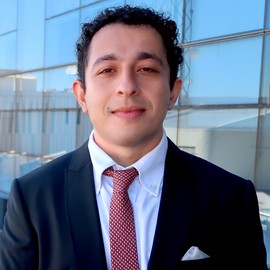
Niyazi Arslan is an Assistant Professor in the Department of Speech Pathology and Audiology at the University of South Alabama and founding director of the Electric & Acoustic Hearing Lab.
Visit Personal WebsiteWhy do two patients with the same cochlear implant, implanted by the same surgeon, have vastly different outcomes? Our lab seeks to understand the neural and technical factors that drive this variability—and translate that knowledge into personalized clinical solutions.
Dr. Arslan's research focuses on the role of auditory nerve condition in cochlear implant efficacy. His work investigates how patterns of neural degeneration—from myelin sheath thinning to peripheral axon loss—affect both the absolute properties and relative changes in psychophysical and electrophysiological responses to electrical stimulation.
By combining psychophysical methods, electrophysiology, and computational approaches, the lab aims to:
- Develop reliable, objective measures of neural health that can be assessed clinically
- Understand how site-specific neural degeneration limits pitch perception and spectral resolution
- Design personalized stimulation strategies matched to each patient's neural condition
- Translate research findings into improved clinical fitting procedures
Research Focus Areas
Neural Health Assessment
Developing and validating measures to infer auditory nerve survival patterns from psychophysical and electrophysiological responses in CI users.
Personalized Stimulation
Testing how stimulation parameters—including polarity, pulse shape, and current focusing—can be optimized based on local neural condition.
Pitch & Spectral Perception
Investigating the perceptual limits of place-pitch sensitivity and how neural health constrains spectral resolution in electrical hearing.
Lab Values
The key to improving cochlear implant outcomes may lie not in building better devices, but in understanding and adapting to each patient's unique auditory neurobiology.
PhD in Speech and Hearing Science, 2025
Arizona State University
MSc in Audiology and Speech Disorders, 2019
Marmara University, Istanbul
BSc in Audiology, 2017
Bezmialem Vakif University, Istanbul